







Cutting Parameters by Material
Optimize your cutting results by using the recommended parameters for each material. These values are based on extensive testing and real-world applications.
| Material |
Thickness |
Power |
Speed |
Gas Type |
Pressure |
| Stainless Steel |
0.5 - 3mm |
80 - 100W |
2000 - 3500 mm/min |
N₂ |
6 - 8 bar |
| Mild Steel |
0.5 - 4mm |
100 - 120W |
1500 - 2500 mm/min |
O₂ |
4 - 6 bar |
| Aluminum |
0.5 - 2mm |
60 - 80W |
3000 - 4500 mm/min |
N₂ |
8 - 10 bar |
| Copper |
0.5 - 1.5mm |
120 - 150W |
1000 - 2000 mm/min |
N₂ |
10 - 12 bar |
| Acrylic |
1 - 5mm |
40 - 60W |
3000 - 5000 mm/min |
Air |
2 - 3 bar |
| Wood/Plywood |
1 - 5mm |
50 - 80W |
2000 - 4000 mm/min |
Air |
1 - 2 bar |
| Leather |
0.5 - 2mm |
30 - 50W |
2500 - 4000 mm/min |
Air |
1 - 1.5 bar |
| Fabric |
0.2 - 1mm |
20 - 40W |
3000 - 5000 mm/min |
Air |
0.5 - 1 bar |
Stainless Steel
Thickness:0.5 - 3mm
Power:80 - 100W
Speed:2000 - 3500 mm/min
Gas Type:N₂
Pressure:6 - 8 bar
Mild Steel
Thickness:0.5 - 4mm
Power:100 - 120W
Speed:1500 - 2500 mm/min
Gas Type:O₂
Pressure:4 - 6 bar
Aluminum
Thickness:0.5 - 2mm
Power:60 - 80W
Speed:3000 - 4500 mm/min
Gas Type:N₂
Pressure:8 - 10 bar
Copper
Thickness:0.5 - 1.5mm
Power:120 - 150W
Speed:1000 - 2000 mm/min
Gas Type:N₂
Pressure:10 - 12 bar
Acrylic
Thickness:1 - 5mm
Power:40 - 60W
Speed:3000 - 5000 mm/min
Gas Type:Air
Pressure:2 - 3 bar
Wood/Plywood
Thickness:1 - 5mm
Power:50 - 80W
Speed:2000 - 4000 mm/min
Gas Type:Air
Pressure:1 - 2 bar
Leather
Thickness:0.5 - 2mm
Power:30 - 50W
Speed:2500 - 4000 mm/min
Gas Type:Air
Pressure:1 - 1.5 bar
Fabric
Thickness:0.2 - 1mm
Power:20 - 40W
Speed:3000 - 5000 mm/min
Gas Type:Air
Pressure:0.5 - 1 bar
💡 Pro Tip:
Always perform a test cut on scrap material before cutting your final piece. Start with lower power settings and gradually increase until you achieve clean cuts without excessive heat damage.
Safety Guidelines & Best Practices
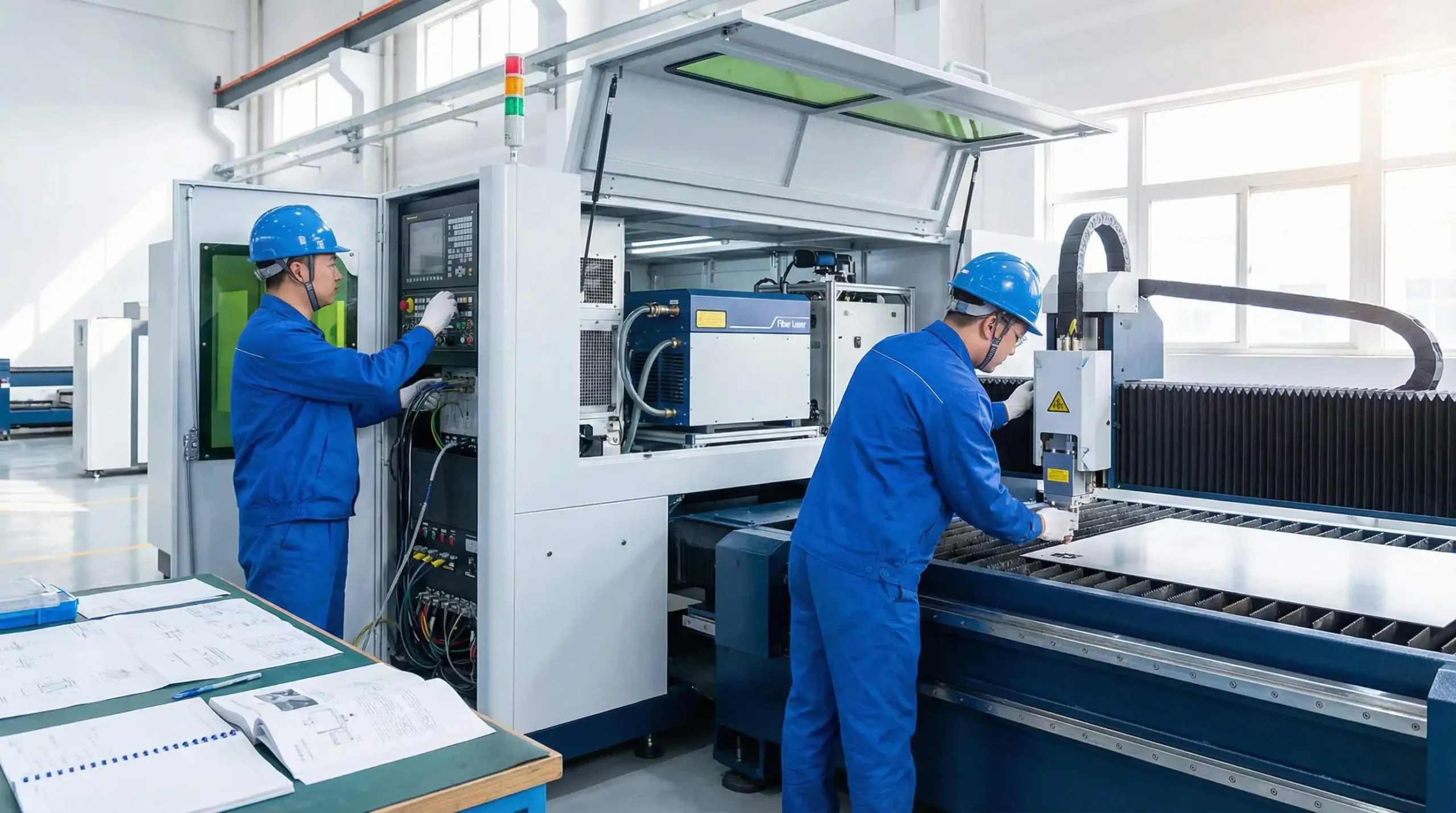
Safety is paramount when operating a fiber laser cutting machine. Follow these essential guidelines to protect yourself and your equipment.
👁️
Eye Protection
Always wear laser safety glasses rated for 1064nm wavelength. Never look directly at the laser beam or reflective surfaces. Keep protective eyewear in good condition and replace if damaged.
🔒
Machine Access
Keep the machine enclosure closed during operation. Only open the cover when the laser is powered off. Never bypass safety interlocks. Ensure emergency stop button is always accessible.
🌡️
Cooling System
Monitor water temperature and flow rate continuously. Never operate without active cooling. Check hoses for leaks before each shift. Replace water filter every 3 months or when flow decreases.
⚡
Electrical Safety
Ensure proper grounding of the machine. Do not operate with wet hands. Keep electrical connections dry and protected. Have a qualified electrician inspect wiring annually.
🚫
Prohibited Materials
Never cut PVC, vinyl, or materials containing halogens - they produce toxic fumes. Avoid cutting materials with high reflectivity. Do not cut materials you cannot identify.
🔥
Fire Prevention
Keep a fire extinguisher nearby. Ensure proper ventilation to remove fumes and smoke. Never leave the machine unattended during operation. Clear debris from cutting bed regularly.
⚠️ Warning:
Fiber laser radiation is invisible and extremely dangerous. Never attempt to modify or bypass safety features. Unauthorized maintenance may void warranty and create serious hazards.
Preventive Maintenance Schedule
Regular maintenance ensures optimal performance, extends machine lifespan, and prevents costly downtime. Follow this comprehensive schedule.
Daily
Daily Checks
- Inspect water temperature and flow rate
- Check for visible damage or leaks
- Clean cutting bed and remove debris
- Verify emergency stop functionality
- Test laser alignment on scrap material
- Check for unusual noises or vibrations
Weekly
Weekly Maintenance
- Clean lens with soft brush (no touching)
- Inspect cooling hoses for cracks
- Check gas pressure levels
- Clean air filter if equipped
- Verify all cable connections
- Lubricate linear rails (if applicable)
Monthly
Monthly Service
- Deep clean optical components
- Check and adjust beam alignment
- Inspect water filter condition
- Test all safety interlocks
- Verify cutting accuracy with test cuts
- Check for corrosion on metal parts
Quarterly
Quarterly Inspection
- Replace water filter element
- Perform full optical alignment
- Inspect laser source cooling
- Check control system software updates
- Test backup power systems
- Review maintenance logs
Semi-Annual
6-Month Service
- Professional calibration check
- Inspect laser tube condition
- Replace cooling fluid if needed
- Full electrical system inspection
- Verify all safety systems
- Performance benchmarking
Annual
Annual Maintenance
- Professional technician inspection
- Laser power output measurement
- Complete optical system overhaul
- Electrical system certification
- Mechanical component inspection
- Warranty service check
✓ Best Practice:
Keep detailed maintenance records including dates, work performed, parts replaced, and any issues encountered. This helps track machine health and supports warranty claims.